
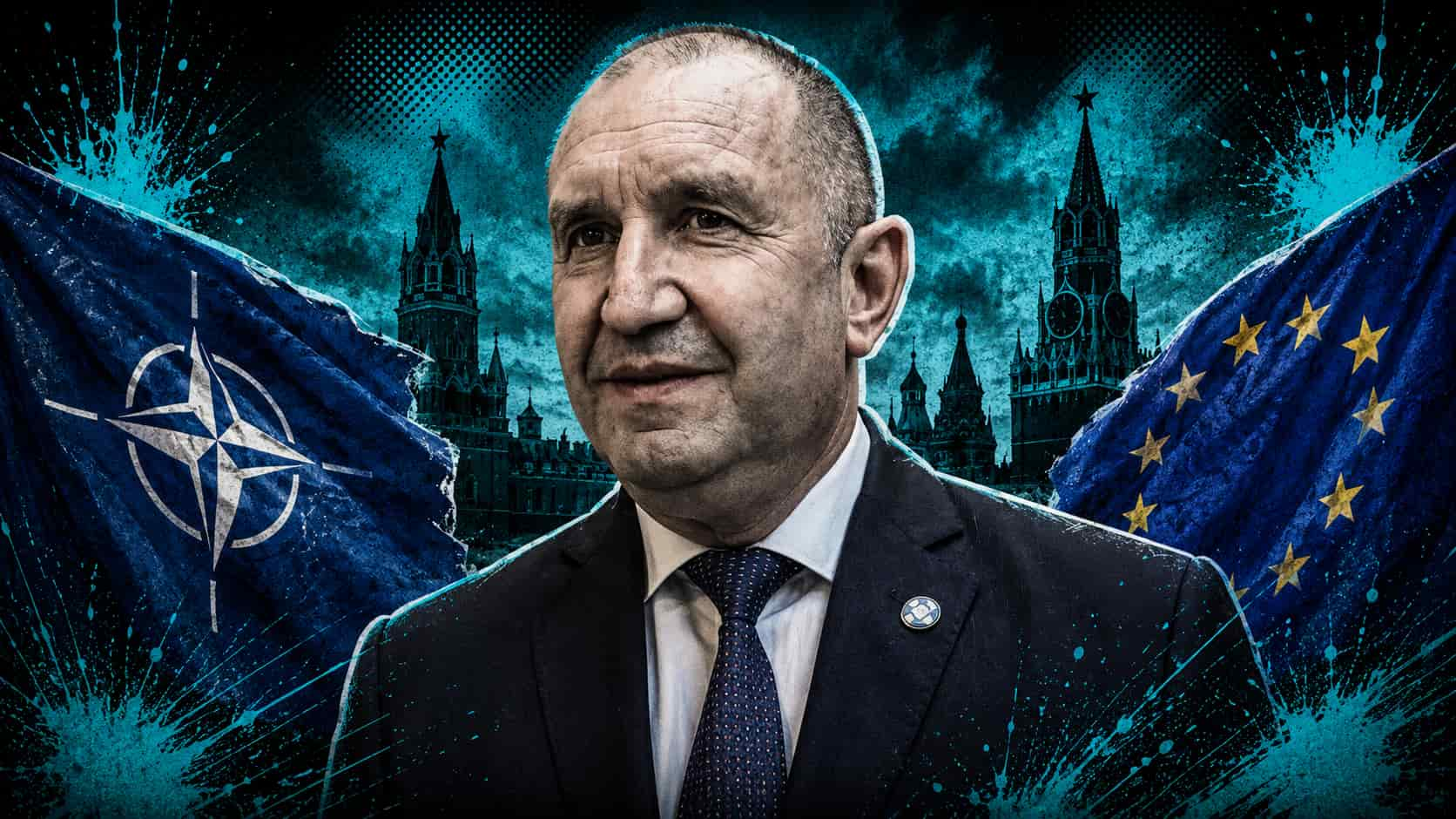
Bulgarian Prime Minister Rumen Radev created another controversy by stating that Bulgaria will not join the Coalition of the Willing, becuase the country has no place in “a coalition that advocates continued financial and military assistance to Ukraine”. This, however, is the latest in a string of controversial statements and actions going back to the start of his premiership, nearly 3 months ago.
On 8th July 2026, NATO pledged €70bn for UKRAINE’s defence – there are no indications that Radev objected to this decision. Furthermore, the NATO website states the following regarding the pledge: “Allies stand united in our unwavering support for Ukraine in defending its freedom, sovereignty, and territorial integrity. […] For 2026, Allies pledge €70 billion in military equipment, assistance and training for Ukraine and affirm their sovereign commitments to sustaining at least equivalent levels in 2027.”
During the same NATO summit, Radev said that Bulgaria will support Ukraine financially. However, he followed this by saying: “the collective west, have been trying to achieve a conventional victory over the biggest nuclear power without having enough capabilities to counter their hypersonic missiles”. This statement portrays NATO and the western countries as the aggressor – a line of propaganda used by the Kremlin for years to justify its war against Ukraine.
Radev waited a day and, back in Bulgaria, stated that the country has no capability to provide aid for Ukraine, blaming previous governments for harming the nation’s finances to the point that the country is now incapable of helping Ukraine financially. Seven of the governments in the last 9 years were caretaker governments appointed directly by Radev himself. Yesterday, 13th July 2026, the foreign minister of Bulgaria – Velislava Petrova-Chamova confirmed that the country will back the 21st package of sanctions against Russia. This was only possible after the Bulgarian government saved 3 oligarchs from being on the list of sanctioned persons.
One of them is Vladimir Mikhailovich Gundyayev – Moscow’s Patriarch. Rumen Radev refused to back the sanctions against him claiming this was in the name of the Orthodox Church, using yet again the Kremlin propaganda talking point that Bulgaria and Russia must stick together due to the fact they are both Slavic countries, using the same alphabet and observing the same religion.
The second person was the former president of Lukoil – Vagit Alekperov. Radev used the argument that the EU can’t impose sanctions against him because Lukoil is suing Bulgaria. While a notice of dispute has been filed by Litasco (the Swiss-registered company that owns Lukoil’s Bulgarian assets), and arbitration proceedings have been initiated or are being prepared, there is no proof of an actual court case against the country.
The third person they saved from being on the list of sanctions oligarch is someone with links to the Metro in Sofia – this is everything Radev said about them.
Yesterday President Macron invited numerous world leaders to join the Coalition of the Willing in support of Ukraine against Russia’s aggression.
Today, 14th July 2026, Radev said: “I personally received an invitation from President Macron to join the Coalition of the Willing. However, I believe Bulgaria’s place is not there, because we are not part of a coalition that advocates continued financial and military assistance to Ukraine. We are not providing such assistance, because I believe the solution to this conflict does not lie in prolonging it through military means, but in a strong diplomatic effort that can finally bring the escalation to an end.”
There is a constant change in Radev’s positions (often depending on the type of audience – domestic or foreign) and this, combined with his pro-Kremlin rhetoric, is causing concerns amongst the democratic community in Bulgaria. With his ever-changing and contradicting actions and statements, Radev seems incapable of following a steady foreign policy narrative, which causes confusion and frustration among people in Bulgaria who support the country’s memberships in NATO and the EU.
Leave a Reply