
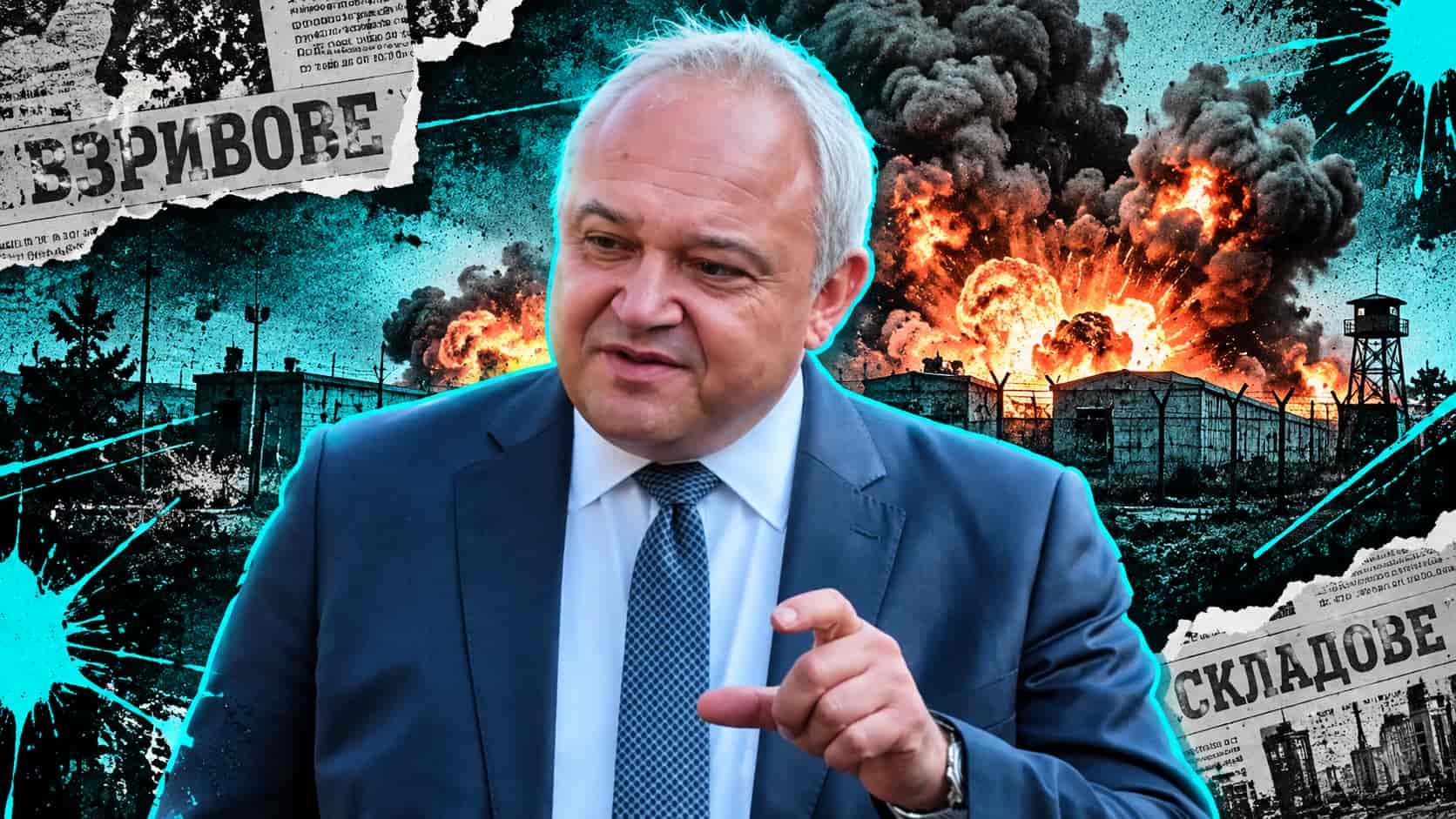
In the night of 11th-12th September 2026 an ammunition storage facility linked to the arms manufacturer EMCO in Bulgaria was engulfed in flames leading to multiple explosions. There were no casualties. The incident however is part of an established pattern of fires and explosions in EMCO owned and related facilities. Now this is used by the Bulgarian government to justify intervening in the country’s private arms industry.
EMCO is a privately owned Bulgarian company that manufactures and trades with weapons and ammunition, including Soviet-standard ammunition. The company has been linked before to selling to Ukraine since the Ukrainian Armed Forces still use a significant amount of Soviet-standard ammunition. In June 2026, the owner of the company Emilyan Gebrev stated that EMCO sells its produce to Poland, Czechia, Slovakia and Romania – enabling the countries to them sell it to Ukraine, rather than EMCO trading directly with Ukraine.
Gebrev, his son and the managing director of EMCO were victims of nerve agent attacks in 2015. Bellingcat later linked the poisonings to agents of the Kremlin.
This is at least the fifth confirmed incident in an EMCO facility since 2011 with the fourth one being just a month ago – on 10th August 2026.
In August, the Minister of the Interior in Bulgaria spoke immediately after the incident ruling out foreign interference before the incident was even dealt with by the emergency services and almost 24 hours before the investigation into the causes even began.
On 12th September 2026 Ivan Demerdzhiev said: “There has been a disregard for the conditions in which explosives and ammunition are stored. There has also been a disregard for the way the facilities are guarded. […] Since the owners are unable to take […] appropriate measures, and it is clear that violations are being allowed to occur, the state will step in and do what is necessary.”
He added: “We are not ruling out external interference, but when the conditions in which explosives are stored, as well as the security arrangements, have been neglected, then one does not exclude the other.”
In other words, the owners are to blame, and the state must now exercise full control. The possibility of foreign interference is quickly minimised as being a possible consequence of bad management. In this way, the incident is used as a tool for state intervention in an industry directly connected to the war in Ukraine.
Considering Prime Minister Rumen Radev’s sympathies towards Moscow, the latest two incidents are remarkably convenient for him, his party Progressive Bulgaria, and potentially for the Kremlin regime.
Leave a Reply