
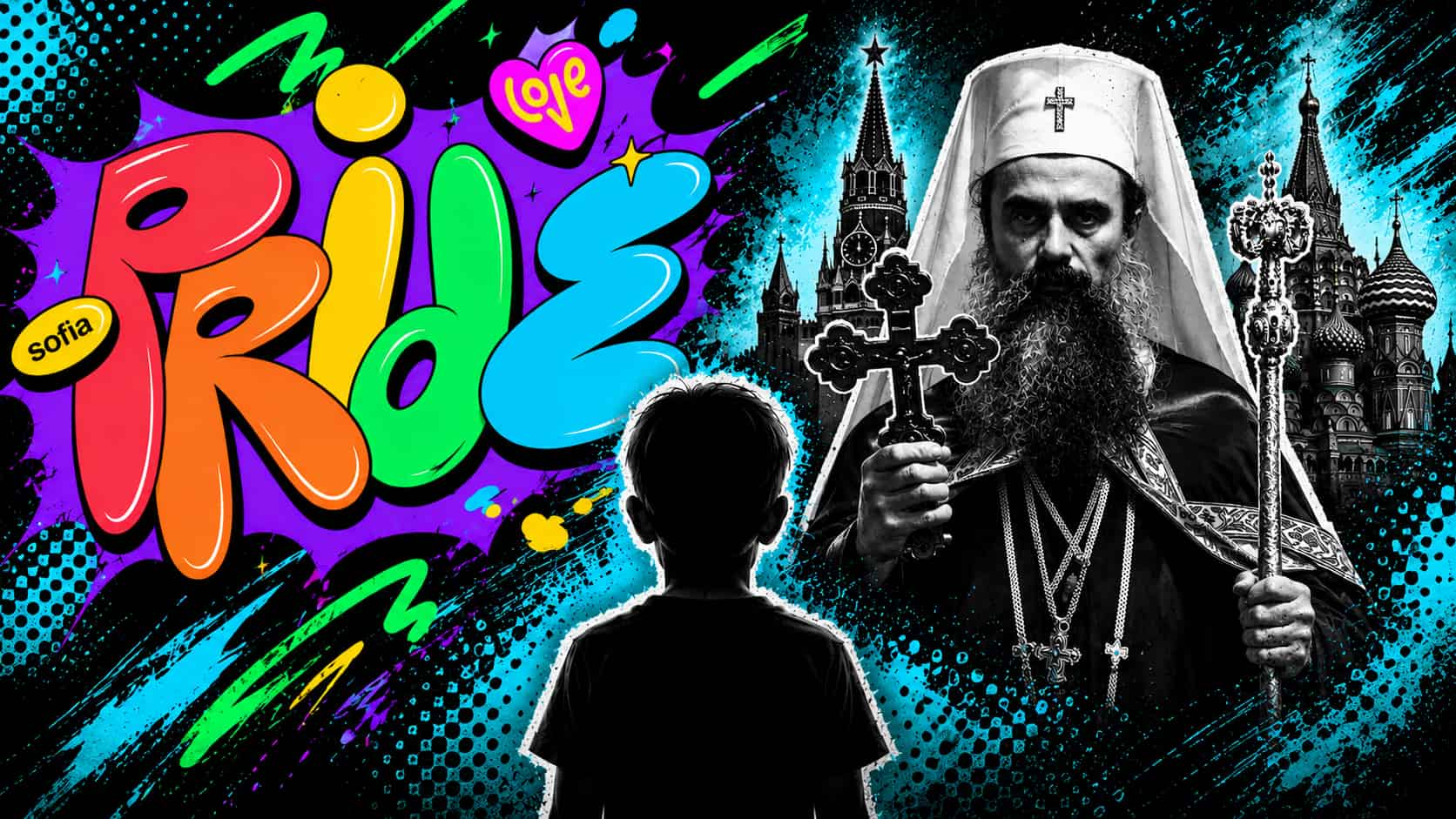
Today Bulgaria is again divided – pro and against the basic human rights of between 3% and 7% of the country’s population. It is Sofia Prida day and two very different events are going to be held – a colourful parade in support of LGBT+ people’s rights and another one “in defence of the traditional family”.
And while no one is actually attacking the “traditional Bulgarian family” and one could argue it needs a whole march in its defence, the most important thing is that the Government and the Church back this event. Further to that – the Bulgarian Patriarch himself leads it.
Bulgaria does not have any official statistics about what percentage of its population identifies themselves as LGBT+, so the above figures had to be estimated based on international research. The numbers are on the conservative side, meaning that the percentage may in reality be higher.
The Government of Rumen Radev and his party Progressive Bulgaria, however, do not see themselves as representing this part of the Bulgarian population. They even go one step further – to support an event held on the same day as Sofia Pride that opposes the very existence of Sofia Pride.
Sofia Pride vs the March in support of the traditional family
Sofia Pride has been an annual event since 2008. The event is organised by non-governmental organisations and is often attended not only by members of the LGBT+ community but also by heterosexual people who would like to support the rights of people with different sexual orientation.
The march in defence of the “traditional family” runs parallel to the pride every year in the last 6 years and it’s organised by the “Moths of the family” community. This is the first year the event is conducted under the patronage of the Holy Metropolis of Sofia. Something they are missing, however, is that over 60% of the children in Bulgaria are born outside of marriage. There are no indications they have organised a march against this issue.
The Government against the “different”
The demographic crisis in Bulgaria has been an issue for decades now. However, instead of supporting all types of couples to have children and therefore increase the number of Bulgarians – Progressive Bulgaria (the ruling party of the country with a big parliamentary majority), supported the march in defence of the “traditional family”. This sent a loud and clear message to the people of different sexual orientation that their basic human rights are something that their own government opposes. Representatives of Progressive Bulgaria branded the Pride as one that “deconstructed social values”.
The face of the traditional family
The head of the Bulgarian Orthodox church – Patriarch Daniil, is leading the procession in support of the “traditional family values” today. He was elected patriarch 2 years ago and from the very beginning, media outside of Bulgaria spotted him as pro-Russian. Atanas Nikolov (as it’s his birth name) refuses to acknowledge the independence of the Ukrainian orthodox church. In 2022, he issued guidance to his clergy not to call Russia “an aggressor”. In 2023, he supported the Kremlin in a lengthy video.
LGBT+ rights in Bulgaria
While Pride is often a celebration in other European capitals, in Bulgaria is also a demonstration in favour of basic human rights that LGBT+ people in Bulgaria are deprived of. While according to some, there are about 300 rights that are available to heterosexual people but not to the people with a different sexual orientation, the main ones are:
- Same sex couples cannot legally marry.
- Same sex couples cannot adopt children.
- People in same sex couples are not recognised as family when it comes to emergencies.
- People in same sex couples cannot legally inherit each other (nor can their children).
The main misconceptions
The thesis most often quoted by people in Bulgaria opposing Pride is: “I don’t mind them doing whatever they want to do, but I don’t want them to show off and demonstrate it, because our children may see it.” Some would go as far as to imply that if their children see same sex couples express affection towards each other, that will make them become gays or lesbians when they grow up.
The context
As a Bulgarian myself, I must acknowledge that you must have felt a cognitive dissonance at least a couple of times while you were reading – and so did I during the writing of this article. It’s very hard to understand why there are Bulgarians who feel that they need to “defend” the “traditional Bulgarian family”, when no one is attacking it. Or why the Government and the Church would turn their backs to a significant portion of the Bulgarian population. And how a child could become homosexual if they see two females holding hands?
I must admit that homophobia is still a thing in Bulgaria and even though the country has come a long way in the last 20 or so years, it’s still considered “scandalous” to be any type of “different”. “Pederast” (a derogatory term for being “gay”) in Bulgaria is still one of the most commonly used insults against males of any sexual orientation.
Where else have we seen this?
If you are thinking “Russia”, your answer is correct! Russia completely forbids all Pride events, public displays of LGBT+ symbols and any advocacy – they have proscribed the movement as “extremis”. This is something they do with everything and everyone the Kremlin doesn’t like or it’s afraid of. Just ask Alexey Navalny – oh, wait – you can’t because they killed him in prison after branding him an “extremist”.
Putin’s regime’s argument for banning LGBT+ is the same as the one we hear in Bulgaria – to protect the “traditional values”.
Unfortunately, with a pro-Kremlin government that aims to spark division rather than unity and a pro-Kremlin church that promises forgiveness only if you conform with their understanding of “normal” while serving foreign interests, there is no bright future in sight – unless Bulgarians themselves fight for it.
Leave a Reply